
Varicocele
Varicocele is a condition caused by enlarged or weakened veins in the scrotum, leading to discomfort, pain, or fertility issues, especially in men. It occurs when faulty valves in the testicular veins allow blood to pool, increasing pressure and causing vein enlargement. Varicocele is a common but often underdiagnosed cause of testicular pain and male infertility.
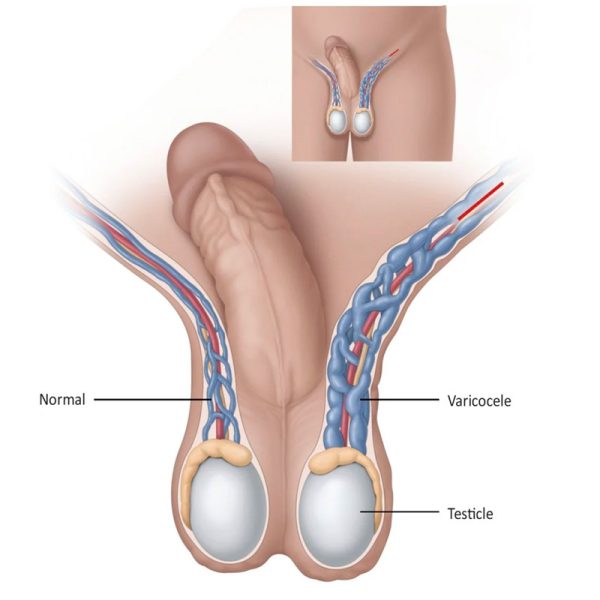
Causes of Varicocele
Varicocele develops when valves in the scrotal veins do not function properly, allowing blood to pool. Common causes and risk factors include:
Faulty vein valves
Increased pressure in abdominal veins
Anatomical differences in vein drainage
Adolescence and young adulthood
Prolonged standing
The exact cause is not always identifiable.
Varicocele Signs and Symptoms
Many men with varicocele have no symptoms. When present, symptoms may include:
Dull or aching pain in the scrotum
Heaviness or discomfort, especially after standing or physical activity
Visible or enlarged twisted veins in the scrotum
Shrinkage of the affected testicle
Fertility problems in some cases
Symptoms often improve when lying down.
Diagnosis and Treatment of Varicocele
Diagnosis is made through physical examination and scrotal Doppler ultrasound to assess enlarged veins and blood flow.
Treatment depends on symptoms and fertility concerns. Options include observation for mild cases, pain management, and minimally invasive procedures or surgery to block or repair abnormal veins.
Early diagnosis and appropriate treatment can relieve discomfort and improve fertility outcomes.
Prevention and Risk Reduction
Varicocele cannot always be prevented, but early detection helps reduce complications. Regular medical evaluation is advised for men with scrotal discomfort or fertility concerns.
Timely diagnosis and appropriate treatment of varicocele can improve comfort, testicular health, and fertility.