
Retinoblastoma
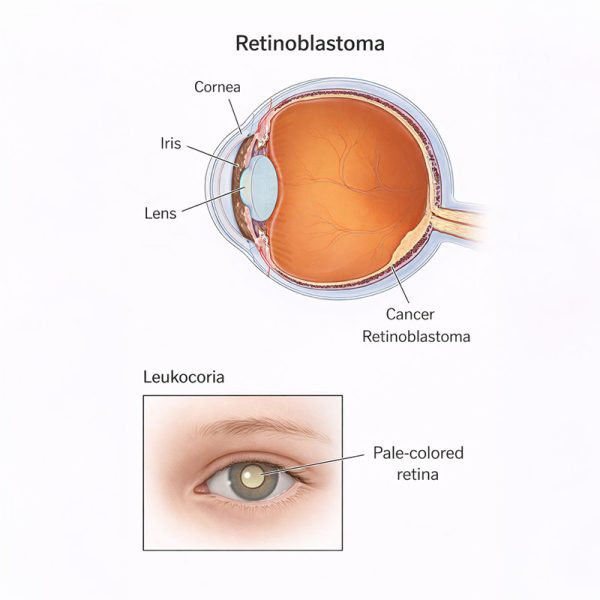
Retinoblastoma is a rare but serious eye cancer that primarily affects infants and young children. It develops in the retina, the light-sensitive tissue at the back of the eye. When diagnosed early, retinoblastoma is highly treatable, and vision can often be preserved. Delayed diagnosis may lead to vision loss or spread of the disease beyond the eye.
Causes of Retinoblastoma
Retinoblastoma is caused by changes (mutations) in the RB1 gene, which controls cell growth in the retina. It may occur as:
Hereditary retinoblastoma, passed from parent to child
Non-hereditary (sporadic) retinoblastoma, occurring without family history
Children with hereditary retinoblastoma may develop tumors in both eyes and are at higher risk for other cancers later in life.
Retinoblastoma Signs and Symptoms
Early signs are often noticed by parents or caregivers and may include:
White pupil (leukocoria) seen in photos or light
Eye redness or swelling
Squinting or crossed eyes
Poor vision or difficulty focusing
Eye pain in advanced cases
Any unusual eye appearance in a child should be evaluated promptly.
Diagnosis and Treatment of Retinoblastoma
Diagnosis is made through a detailed eye examination (often under anesthesia), along with imaging tests such as ultrasound and MRI to assess tumor size and spread. Genetic testing may be advised in suspected hereditary cases.
Treatment depends on the stage and extent of disease and may include chemotherapy, laser therapy or cryotherapy, radiation therapy in selected cases, or surgical removal of the eye in advanced tumors.
Early diagnosis and timely treatment improve survival and help preserve vision.
Prevention and Risk Reduction
While retinoblastoma cannot always be prevented:
Genetic counseling and screening help detect hereditary cases early
Regular eye examinations in high-risk children are essential
Early medical attention for eye abnormalities reduces complications
Early diagnosis and timely treatment of retinoblastoma can save vision and lives.