
Pelvic Congestion Syndrome (PCS)
Pelvic Congestion Syndrome (PCS) is a condition caused by enlarged or weakened veins in the pelvic region, leading to chronic pelvic pain, especially in women. It occurs when faulty valves in pelvic veins allow blood to pool, increasing pressure in the veins. PCS is a common but often underdiagnosed cause of long-standing pelvic pain.
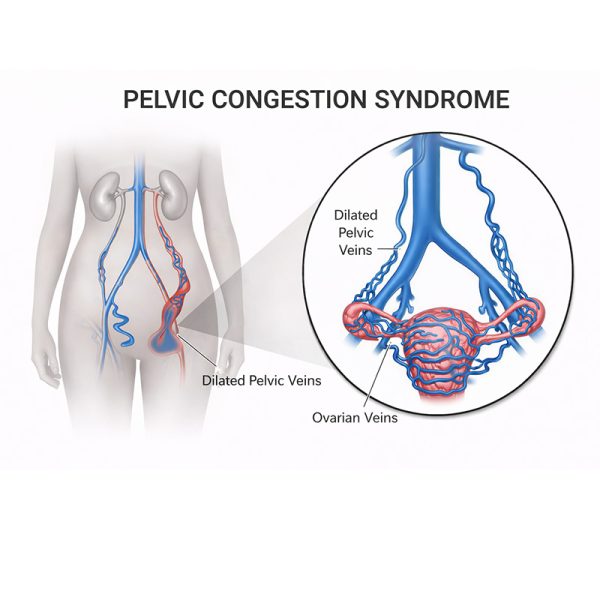
Causes of Pelvic Congestion Syndrome (PCS)
PCS develops due to impaired blood flow in pelvic veins. Common causes and risk factors include:
Weak or damaged vein valves
Hormonal influences, especially estrogen
Pregnancy, which increases pressure on pelvic veins
Multiple pregnancies
Family history of venous disease
Prolonged standing or sitting
These factors lead to vein enlargement and persistent venous congestion.
Pelvic Congestion Syndrome (PCS) Signs and Symptoms
Symptoms are usually chronic and may worsen over time. Common symptoms include:
Dull, aching pelvic pain lasting more than six months
Pain that worsens with standing, walking, or at the end of the day
Pelvic pain during or after sexual intercourse
Lower back or abdominal discomfort
Visible varicose veins in the pelvic, thigh, or buttock area
Symptoms may intensify during menstruation or pregnancy.
Diagnosis and Treatment of Pelvic Congestion Syndrome (PCS)
Diagnosis involves clinical evaluation along with imaging tests such as pelvic ultrasound, CT or MRI, and venography to identify enlarged or refluxing pelvic veins.
Treatment depends on symptom severity and may include pain management and hormonal therapy, endovascular embolization to block abnormal veins, and lifestyle modifications to improve venous circulation.
Early diagnosis and targeted treatment can significantly relieve symptoms and improve quality of life.
Prevention and Risk Reduction
While PCS may not always be preventable, risk can be reduced by:
Maintaining a healthy weight
Avoiding prolonged standing
Regular physical activity
Early evaluation of chronic pelvic pain
Timely diagnosis and appropriate treatment of pelvic congestion syndrome can provide lasting symptom relief and improve daily functioning.