
Meningioma
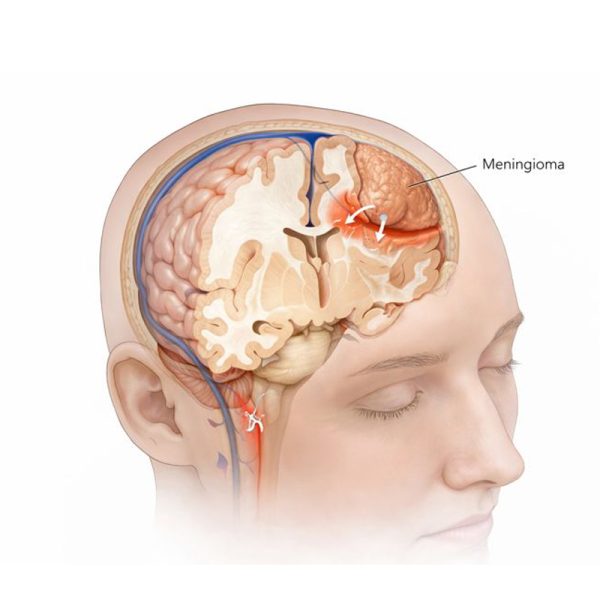
A meningioma is a usually benign (non-cancerous) tumor that develops from the meninges, the protective membranes covering the brain and spinal cord. Meningiomas are the most common type of brain tumor and often grow slowly. While many remain asymptomatic, larger tumors can press on the brain or nerves and cause neurological symptoms, requiring medical evaluation and treatment.
Causes of Meningioma
The exact cause of meningioma is not always known, but factors associated with increased risk include:
Genetic changes in meningeal cells
Radiation exposure, especially to the head during childhood
Hormonal factors, as meningiomas are more common in women
Certain genetic conditions, such as neurofibromatosis type 2 (rare)
Most meningiomas develop without a clear trigger.
Meningioma Signs and Symptoms
Symptoms depend on the size and location of the tumor and may develop gradually:
Persistent headaches
Seizures
Vision or hearing problems
Weakness or numbness in limbs
Memory or personality changes
Some meningiomas cause no symptoms and are discovered incidentally during imaging for other conditions.
Diagnosis and Treatment of Meningioma
Diagnosis is primarily done using MRI of the brain, which provides detailed images of the tumor. A CT scan may be used to assess bone involvement, and a biopsy is performed in selected cases to confirm the diagnosis.
Treatment depends on the size, location, growth rate, and symptoms. Options include regular monitoring for small, slow-growing tumors, surgical removal for symptomatic or growing meningiomas, and radiation therapy or radiosurgery when surgery is not feasible.
Early diagnosis and appropriate treatment help prevent neurological complications and improve outcomes.
Prevention and Risk Reduction
There is no guaranteed way to prevent meningioma, but risk may be reduced by:
Avoiding unnecessary radiation exposure
Regular follow-up for individuals with known risk factors
Early evaluation of persistent neurological symptoms
Early diagnosis and appropriate treatment of meningioma can preserve brain function and improve outcomes.