
Aortic Dissection
An aortic dissection is a serious and life-threatening condition in which a tear develops in the inner layer of the aorta, the main artery carrying blood from the heart to the body. Blood flows through the tear, causing the layers of the aortic wall to separate (dissect). Aortic dissection requires immediate medical attention, as it can lead to rupture, organ damage, or death if not treated promptly.
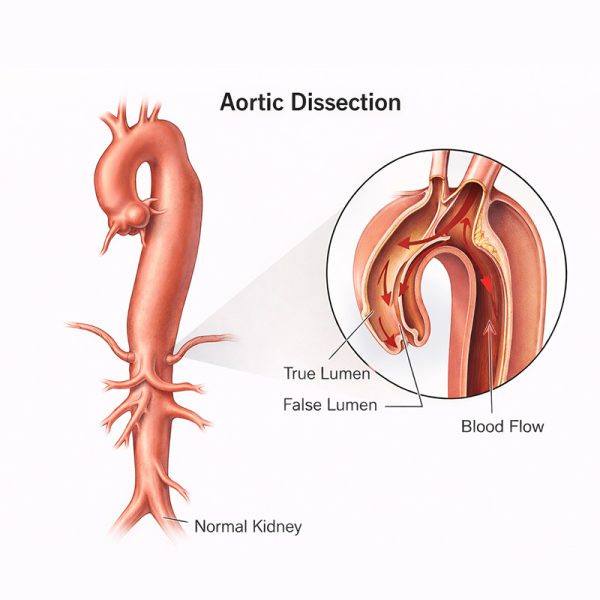
Causes of Aortic Dissection
Aortic dissection occurs when the aortic wall becomes weakened. Common causes and risk factors include:
Long-standing uncontrolled high blood pressure
Atherosclerosis
Connective tissue disorders (such as Marfan or Ehlers-Danlos syndrome)
Congenital heart or aortic conditions
Aortic aneurysm
Trauma or injury to the chest
Increasing age and male gender
High blood pressure is the most significant risk factor.
Aortic Dissection Signs and Symptoms
Symptoms usually appear suddenly and may include:
Severe, sharp, tearing chest or back pain
Pain that may move to the neck, jaw, or abdomen
Shortness of breath
Dizziness or fainting
Weakness or paralysis
Loss of consciousness
Aortic dissection is a medical emergency and requires immediate hospital care.
Diagnosis and Treatment of Aortic Dissection
Diagnosis requires urgent imaging such as CT angiography (CTA), MRI, or transesophageal echocardiography (TEE) to confirm the tear and assess its extent.
Treatment depends on the location of the dissection. Emergency surgery is required for dissections involving the ascending aorta, while medical management with strict blood pressure and heart rate control or endovascular repair may be used in selected cases.
Immediate diagnosis and treatment are critical to prevent life-threatening complications.
Prevention and Risk Reduction
Risk of aortic dissection can be reduced by:
Strict control of blood pressure
Regular monitoring of known aortic disease
Avoiding smoking
Managing cholesterol and heart conditions
Routine follow-up for high-risk individuals
Early recognition and rapid treatment of aortic dissection can save lives and prevent catastrophic complications.