
Aortic Aneurysm
An aortic aneurysm is a condition in which a section of the aorta, the largest artery in the body, becomes weakened and bulges outward. Aortic aneurysms can occur in the chest (thoracic aortic aneurysm) or abdomen (abdominal aortic aneurysm). Small aneurysms may not cause symptoms, but larger or ruptured aneurysms are life-threatening emergencies requiring immediate medical attention.
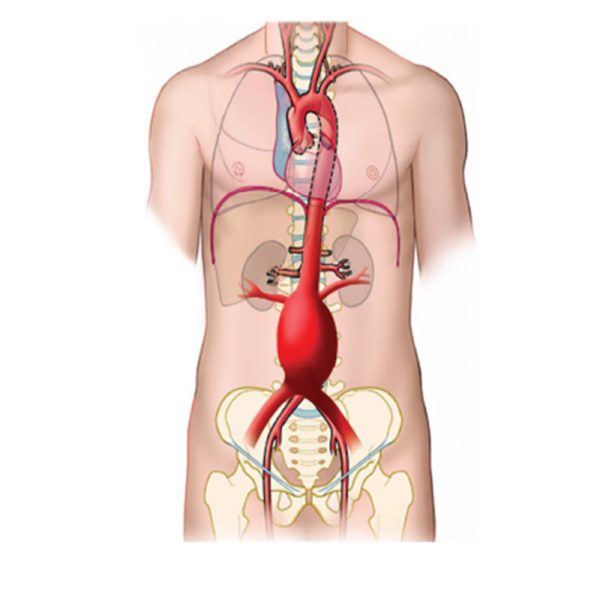
Causes of Aortic Aneurysm
Aortic aneurysms develop due to weakening of the aortic wall. Common causes and risk factors include:
Atherosclerosis (plaque buildup)
Long-standing high blood pressure
Smoking
Genetic or inherited connective tissue disorders
Increasing age
Male gender
Family history of aneurysm
Trauma or injury
These factors increase stress on the aortic wall, leading to dilation.
Aortic Aneurysm Signs and Symptoms
Many aortic aneurysms cause no symptoms and are found incidentally. When symptoms occur, they may include:
Deep, constant pain in the chest, back, or abdomen
Pulsating sensation in the abdomen
Shortness of breath or hoarseness (thoracic aneurysm)
A ruptured aortic aneurysm may cause:
Sudden severe pain
Dizziness or fainting
Rapid heartbeat
Low blood pressure
This is a medical emergency.
Diagnosis and Treatment of Aortic Aneurysm
Diagnosis is done using imaging tests such as ultrasound (commonly for abdominal aortic aneurysm), CT scan or MRI, and CT or MR angiography to determine the size, location, and risk of rupture.
Treatment depends on the aneurysm’s size, growth rate, and symptoms. Small, stable aneurysms may be monitored regularly with blood pressure control. Larger or high-risk aneurysms are treated with endovascular stent grafting or open surgical repair.
Early diagnosis and timely treatment reduce the risk of rupture and life-threatening complications.
Prevention and Risk Reduction
You can reduce the risk of aortic aneurysm by:
Controlling blood pressure and cholesterol
Quitting smoking
Maintaining a healthy weight
Regular medical screening if at high risk
Early diagnosis and appropriate treatment of aortic aneurysm can save lives and prevent serious complications.