
Deep Vein Thrombosis (DVT)
Deep Vein Thrombosis (DVT) is a condition in which a blood clot forms in a deep vein, most commonly in the legs. DVT can reduce blood flow and cause pain and swelling. If part of the clot breaks off and travels to the lungs, it can cause a pulmonary embolism (PE), which is a life-threatening emergency. Early diagnosis and treatment are essential to prevent serious complications.
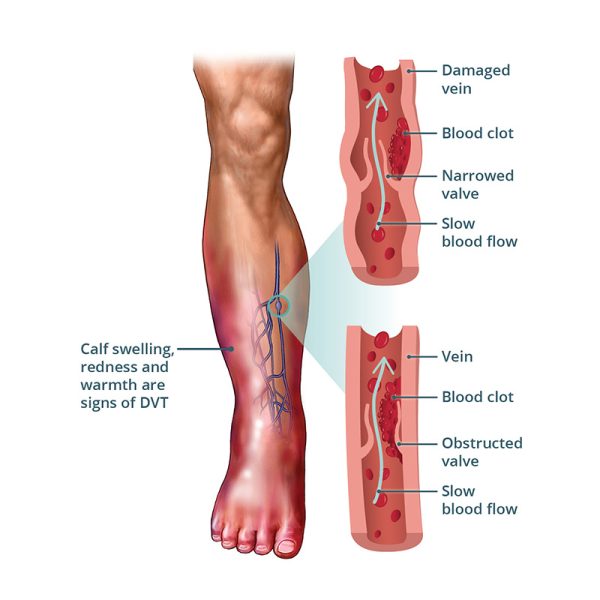
Causes of Deep Vein Thrombosis (DVT)
DVT develops when blood flow slows or clotting increases. Common causes and risk factors include:
Prolonged immobility (long travel, bed rest, hospitalization)
Recent surgery or injury
Pregnancy and postpartum period
Cancer and cancer treatment
Blood clotting disorders
Obesity
Smoking
Increasing age
Multiple risk factors may be present in many patients.
Deep Vein Thrombosis (DVT) Signs and Symptoms
Some people with DVT may have no symptoms. When symptoms occur, they may include:
Swelling in one leg or calf
Pain or tenderness, often starting in the calf
Warmth and redness of the affected leg
Leg heaviness or cramping
Sudden shortness of breath, chest pain, or coughing blood may indicate pulmonary embolism and require immediate emergency care.
Diagnosis and Treatment of Deep Vein Thrombosis (DVT)
Diagnosis is primarily done using Doppler ultrasound to detect blood clots in deep veins. Blood tests such as D-dimer and CT or MR venography may be used in selected cases.
Treatment focuses on preventing clot growth and complications. This includes anticoagulant (blood-thinning) medications, compression therapy to reduce swelling, and advanced procedures in severe cases. IVC filters may be used when anticoagulants are not suitable.
Early diagnosis and treatment reduce the risk of pulmonary embolism and long-term complications
Prevention and Risk Reduction
You can reduce the risk of DVT by:
Staying active and avoiding prolonged immobility
Regular movement during long travel
Maintaining a healthy weight
Quitting smoking
Following preventive medication advice after surgery or during hospitalization
Early recognition and proper treatment of deep vein thrombosis can prevent life-threatening complications.