
Renal Artery Stenosis
Renal artery stenosis is a condition in which one or both arteries supplying blood to the kidneys become narrowed or blocked. This reduced blood flow can impair kidney function and lead to uncontrolled high blood pressure. If left untreated, renal artery stenosis may result in chronic kidney disease or kidney failure.
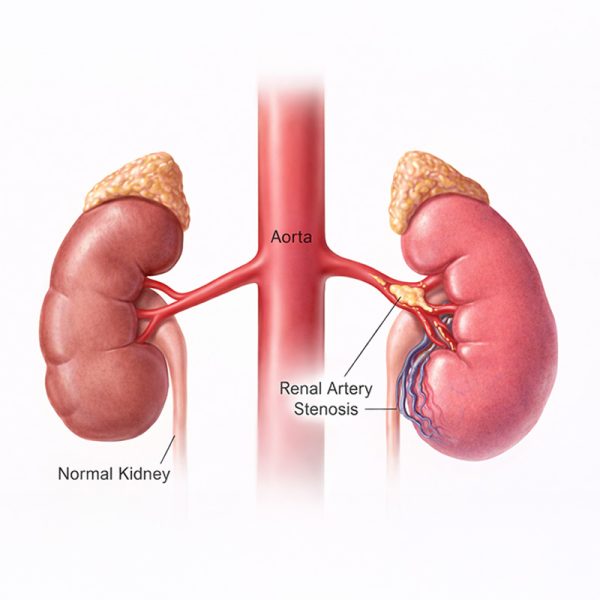
Causes of Renal Artery Stenosis
Renal artery stenosis commonly develops due to:
Atherosclerosis (fatty plaque buildup in arteries)
Fibromuscular dysplasia, especially in younger individuals
High blood pressure
Smoking
Diabetes
High cholesterol
Increasing age and family history of vascular disease
Atherosclerosis is the most common cause in older adults.
Renal Artery Stenosis Signs and Symptoms
Many patients may not notice symptoms initially. When present, symptoms may include:
High blood pressure that is difficult to control
Sudden worsening of previously stable blood pressure
Reduced kidney function
Fluid retention and swelling
Shortness of breath in advanced cases
Symptoms often develop gradually and require medical evaluation.
Diagnosis and Treatment of Renal Artery Stenosis
Diagnosis includes clinical examination, Ankle-Brachial Index (ABI) testing, and Doppler ultrasound to assess blood flow. CT or MR angiography may be used to define the extent of arterial narrowing.
Treatment focuses on improving blood flow and reducing risk factors. This includes lifestyle modification and smoking cessation, medications to control cholesterol, blood pressure, and clotting, supervised exercise therapy, and endovascular procedures or surgery in advanced cases.
Early diagnosis and treatment help relieve symptoms and prevent serious limb and cardiovascular complications.
Prevention and Risk Reduction
Diagnosis is made using Doppler ultrasound to assess kidney blood flow, along with CT or MR angiography to identify arterial narrowing. Renal angiography may be performed in selected cases for detailed evaluation.
Treatment depends on the severity of narrowing and kidney function. Options include medical management to control blood pressure and cholesterol, lifestyle modifications, and angioplasty with or without stenting to restore blood flow. Surgical treatment may be considered in select patients.
Early diagnosis and treatment help protect kidney function and control blood pressure.